
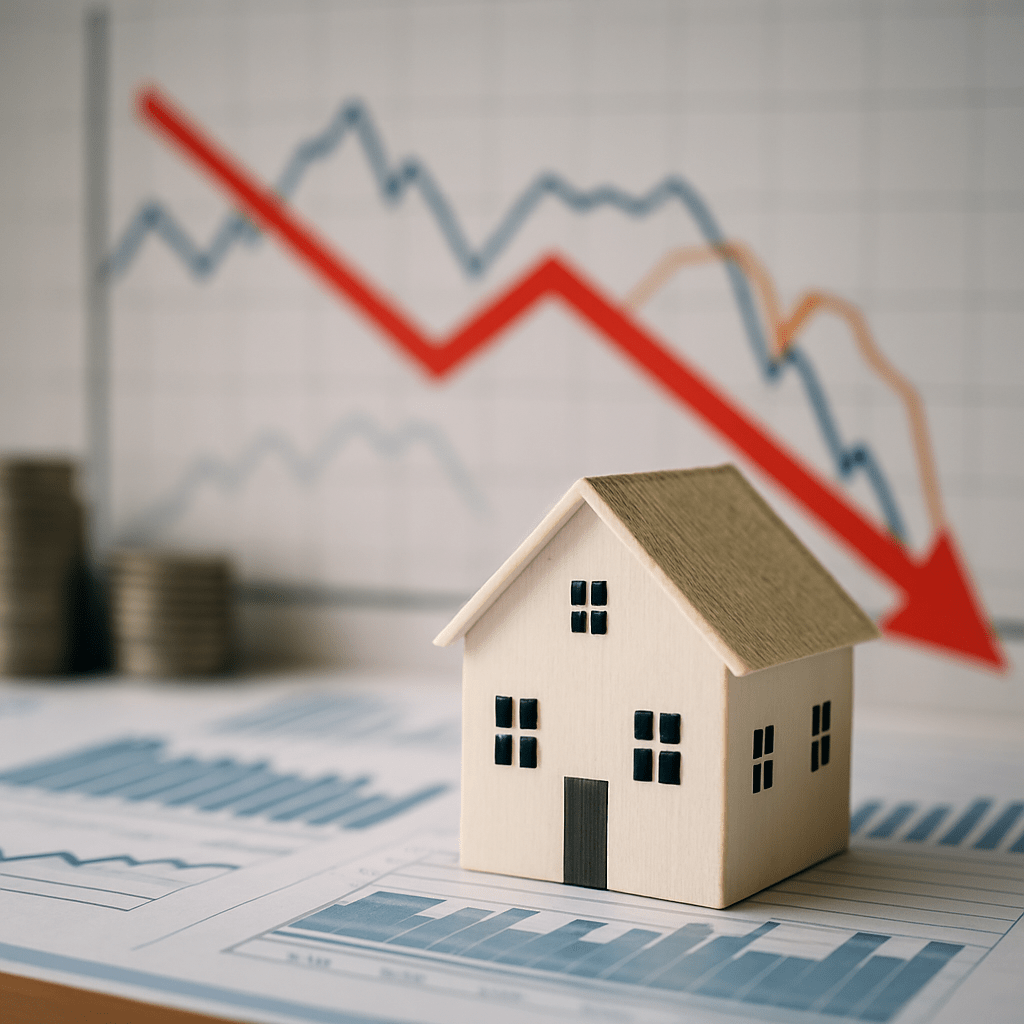
Over the last few months, the national housing narrative has shifted from “cooling” to a more serious question: are we heading into a real correction? A recent interview with housing analyst Melody Wright poured fuel on that discussion, suggesting median home prices could fall more than 50 percent as affordability collapses across the country.
It’s a bold forecast—and one that has sparked significant debate. I want to break down what’s real, what’s noise, and what investors and developers should be paying attention to as we move into 2026.
A Stark Warning That’s Getting Attention
Globe St highlighted Wright’s comments on the Thoughtful Money podcast, where she argued that prices may need to fall dramatically to reconnect with median household incomes. In her view, the adjustment could happen faster than the 2008 collapse because the market is already stretched to the breaking point.
You don’t have to accept a 50 percent decline scenario to acknowledge the underlying truth: affordability is deteriorating, and the data is finally reflecting that strain.
Zillow Data Shows the Cooling Is Real
Zillow’s latest report shows something we haven’t seen since 2012—the year the market bottomed out after the last major housing crash:
53 percent of U.S. homes lost value over the past year.
That is a sharp departure from the six-year run-up that defined the post-pandemic housing era. The shift is driven primarily by a slowdown in the middle and lower tiers of the market, where buyers have been hit hardest by elevated prices and rates.
As a result, the bulk of transactions today sit at the higher end of the price spectrum. When the only people transacting are in the top tier, the median price looks stronger than the market underneath it.
Wright captured this dynamic well:
“You have this bifurcated housing market. The majority of buyers are in upper price tiers, so your median home price looks high—even as affordability worsens.”
We see this clearly in overheated Sun Belt markets, where the pandemic surge created unsustainable pricing in certain cities. Those markets are now the first to show signs of deceleration.
The Forecast Is Divisive—and for Good Reason
A predicted 50 percent price correction was always going to spark debate. Some industry players call it fear-driven analysis. Others argue that softer pricing is exactly what the market needs to restore equilibrium.
Zillow is firmly in the “normalization, not crash” camp.
Senior economic researcher Treh Manhertz emphasized that most homeowners are not underwater and that the recent pullback is part of a broader rebalancing following historic gains.
“Homeowners may feel rattled when they see their Zestimate drop,” he said. “But most aren’t selling at a loss. Prices surged over the past six years, and most owners still hold strong equity positions.”
Why 2025 Is Not 2008
The comparisons to the last crash tend to overlook the structural differences in today’s market:
Lending standards are far more stringent The majority of homeowners hold historically low fixed-rate mortgages Equity positions are substantially stronger The country is still structurally undersupplied on housing
Compass broker Chris Reis summarized it well:
“There won’t be a reason for people to panic sell like they did in 2008.”
That matters. Crashes happen when forced sellers meet weak demand. Today, even with affordability stretched, we do not have a supply crisis on the market side—we have a supply crisis on the construction side.
So Where Does the Market Go From Here?
Even if Wright’s 50 percent scenario is unlikely, her core argument resonates: affordability is deteriorating at a pace we can’t ignore. The post-pandemic surge is over. The next phase will be shaped by:
Stable or slightly improving demand in lower price tiers Ongoing affordability pressure from rates and insurance Regional divergence—with overheated markets adjusting first A national conversation about how to build supply at scale
For investors, developers, and operators, this is the moment to focus on fundamentals. Demand hasn’t disappeared—it has just shifted to price points most builders aren’t meeting.
If we want a healthier, more resilient housing ecosystem in 2026 and beyond, the industry will need to confront the affordability gap head-on and rethink how supply gets delivered.
 Daniel Kaufman Real Estate
Leave a comment