
The demographic engine of the United States is shifting — fast.
According to the latest Markerr Population Forecast (through August 2031), population growth is becoming increasingly concentrated across the South and Southeast, with coastal and Sunbelt metros driving much of the expansion.
Smaller but rapidly emerging cities like Myrtle Beach, SC and Fayetteville, AR, along with major metros like Houston, Dallas, and Orlando, are leading the next decade of growth — while older industrial and coastal urban centers continue to lose momentum.
Where Growth Is Accelerating
The headline story is simple: people are moving South.
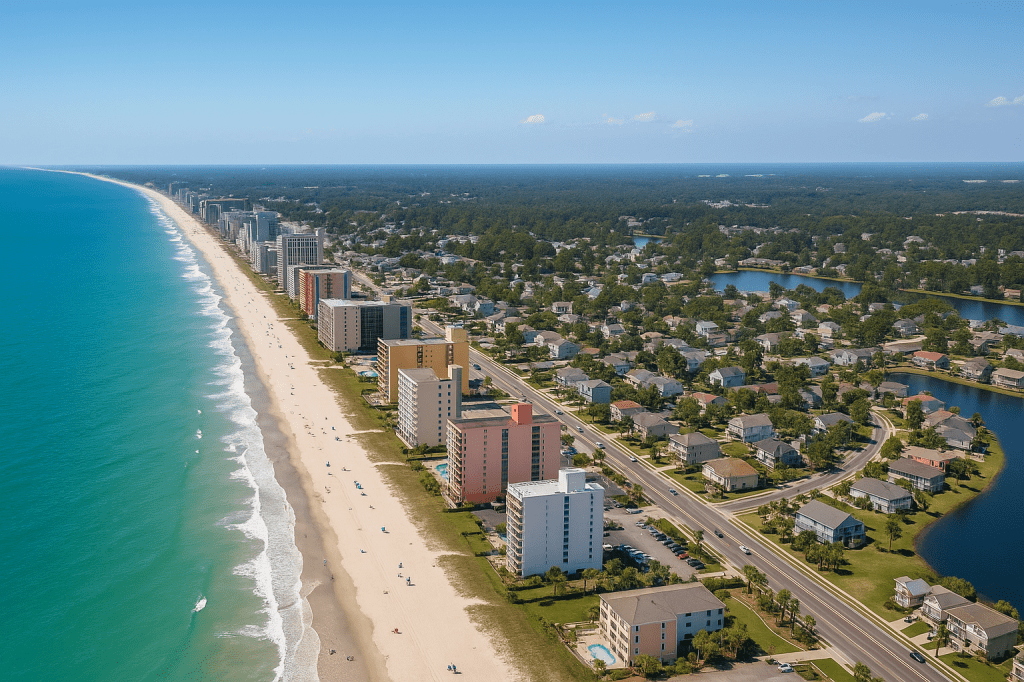
Myrtle Beach is expected to finish 2025 as the fastest-growing metro area in the U.S., with an annual population increase of 3.2% — continuing a streak of growth exceeding 3.5% per year since 2020.
Florida markets dominate the near-term outlook.
Port St. Lucie, Lakeland, and Orlando each show forecast gains between 2.2% and 2.3%. Charleston, SC, and Fayetteville, AR, are close behind at around 2.0% annual growth.
Meanwhile, the larger Southern metros are expanding by sheer volume:
Houston is projected to add roughly 165,000 new residents in 2025. Dallas follows with 147,000, while Atlanta, Orlando, and Charlotte each expect 50,000+ new arrivals. Even New York City, after pandemic-era losses, is poised for a major rebound with 177,780 new residents — one of the largest population turnarounds in the nation.
Where Growth Is Stalling
Not every region is sharing in the boom.
New Orleans remains the weakest-performing metro, projected to decline another 0.1% in 2025, marking several consecutive years of contraction.
Northeastern and Rust Belt cities such as Pittsburgh, Buffalo, Syracuse, and Rochester continue to face stagnant or negative growth, while Los Angeles and Thousand Oaks, CA, remain weighed down by persistent outmigration and affordability pressures.
Looking ahead, the five-year outlook reinforces these divides:
Myrtle Beach, Sarasota, and Cape Coral, FL are all projected to grow over 3% annually through 2030. Boise, ID, Provo-Orem, UT, and Huntsville, AL also rank among the top-tier growth markets with 2.6%–2.8% annual gains. In contrast, New Orleans, Pittsburgh, Memphis, and Akron are expected to grow less than 0.1% per year, signaling continued demographic stagnation.
The Broader Picture: The South Takes the Lead
Seven of the top ten projected growth markets over the next five years are in Florida and the Carolinas, confirming what many developers and investors have already recognized — the South is now the center of gravity for U.S. population expansion.
The Midwest and Northeast, meanwhile, remain constrained by higher costs, limited housing availability, and aging infrastructure. The shift toward warmer, more affordable, business-friendly regions is no longer cyclical — it’s structural.
What It Means for Developers and Investors
For those of us building and investing in housing, this data reinforces what we’re already seeing on the ground. Population growth is the foundation of every real estate cycle — it drives demand, stabilizes absorption, and underpins long-term value creation.
These migration trends signal where to build, where to buy, and where to allocate capital:
Smaller Southern metros like Fayetteville, Huntsville, and Charleston offer ideal conditions for Build-to-Rent (BTR) and attainable multifamily development. Emerging coastal markets such as Myrtle Beach and Cape Coral combine affordability and lifestyle appeal — the formula for sustained in-migration. High-growth metros like Houston, Dallas, and Orlando remain the volume drivers, offering scale and liquidity for institutional investors.
Developers who move early into these next-wave cities — before institutional capital crowds in — can secure land at favorable prices, navigate local approvals efficiently, and deliver product into expanding demand.
In short: follow the people, not the headlines.
The markets gaining residents today will be the ones driving returns tomorrow.
Looking Ahead
Markerr’s machine-learning models, trained on U.S. Census and American Community Survey data, project that population momentum will remain strongest in metros that balance affordability, employment opportunity, and quality of life.
Those three factors — cost, jobs, and lifestyle — are now reshaping America’s real estate map.
For developers and investors, the opportunity isn’t just to follow growth — it’s to anticipate it.
Because by the time the data becomes consensus, the deals are already gone.
Would you like me to format this post for your website with a header image concept, SEO tags, and a short meta description (for Google search and social sharing)?
 Daniel Kaufman Real Estate
Leave a comment