
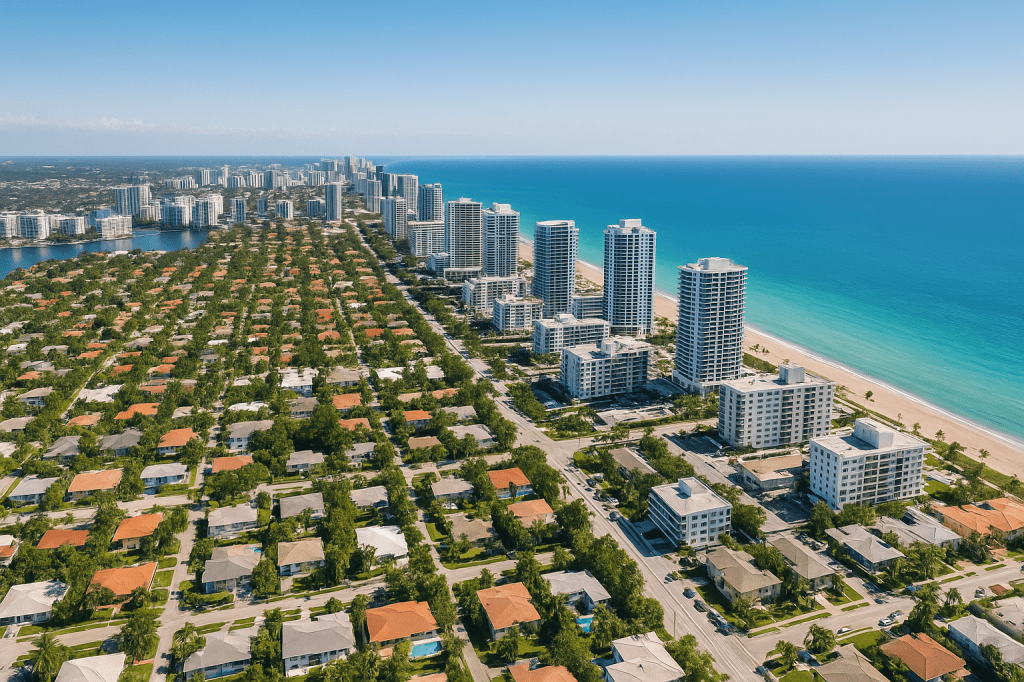
Florida’s housing story is one of relentless growth colliding with structural limits. For years, the Sunshine State has attracted new residents faster than builders and policymakers could respond — and now, the numbers finally show just how deep the shortage runs.
According to a new interactive map from the Florida Housing Data Project, the state is short more than 120,000 housing units — roughly 55,000 single-family homes and 66,000 rental units missing from the market.
📍 Explore the data here: Florida Housing Data Project Interactive Map
Where the Crisis Hits Hardest
The housing gap is most acute in Florida’s major metro areas, particularly Miami-Dade, Fort Lauderdale, and Tampa — regions that already rank among the least affordable housing markets in the country.
Miami-Dade County, home to 2.6 million residents, needs over 7,000 new rental units and 5,000 owner-occupied homes just to meet current demand. Hillsborough County (Tampa) is short 8,360 units, while Broward County (Fort Lauderdale) faces a deficit exceeding 10,000 homes.
These numbers represent more than just data points — they reveal a structural imbalance between demand and supply that’s eroding affordability and pushing working families further from where the jobs are.
Why It’s Happening
The reasons behind Florida’s housing shortage mirror what we’re seeing nationwide. According to the developers of the Florida Housing Data Project — housing economists from Florida State University’s DeVoe L. Moore Center, the Florida Policy Project, and the Reason Foundation — the state’s supply challenges stem largely from permitting delays, restrictive zoning, and limited adoption of flexible housing solutions like accessory dwelling units (ADUs) and small multifamily formats.
As the project’s authors put it:
“Restrictive zoning locks in low-density, single-family development and often ignores the demand for smaller homes, townhomes, and apartments.”
That lack of diversity in housing types is precisely what prevents Florida’s fastest-growing regions from keeping up with population and job growth.
Why This Tracker Matters
What makes this new data tool so valuable is its local focus. For the first time, policymakers, developers, and residents can see — at the county level — just how far behind the housing pipeline has fallen.
“With straightforward housing supply numbers tailored for local use,” the organizations stated, “citizens and policymakers alike can see how deeply the housing shortage cuts into their communities — and why fixing Florida’s broken housing system is no longer optional.”
As someone who develops housing across multiple states, I can tell you that visibility like this is rare. Tools that combine housing and population data at this scale are exactly what local governments and builders need to align incentives, streamline permitting, and bring supply closer to where the demand actually lives.
The Big Picture
Florida remains one of the fastest-growing states in the nation — and that momentum isn’t slowing down. The question now isn’t whether Florida can keep growing, but whether it can grow smart.
To close the 120,000-unit gap, the state will need to embrace higher-density zoning, modular construction, and more flexible permitting frameworks — strategies that make it possible to deliver units faster and more affordably.
The new housing tracker is a step in the right direction. But the real work begins with turning that data into action.
📊 Explore the interactive map and full data set here: https://florida-housing-data-project.reason.org
 Daniel Kaufman Real Estate
Leave a comment