
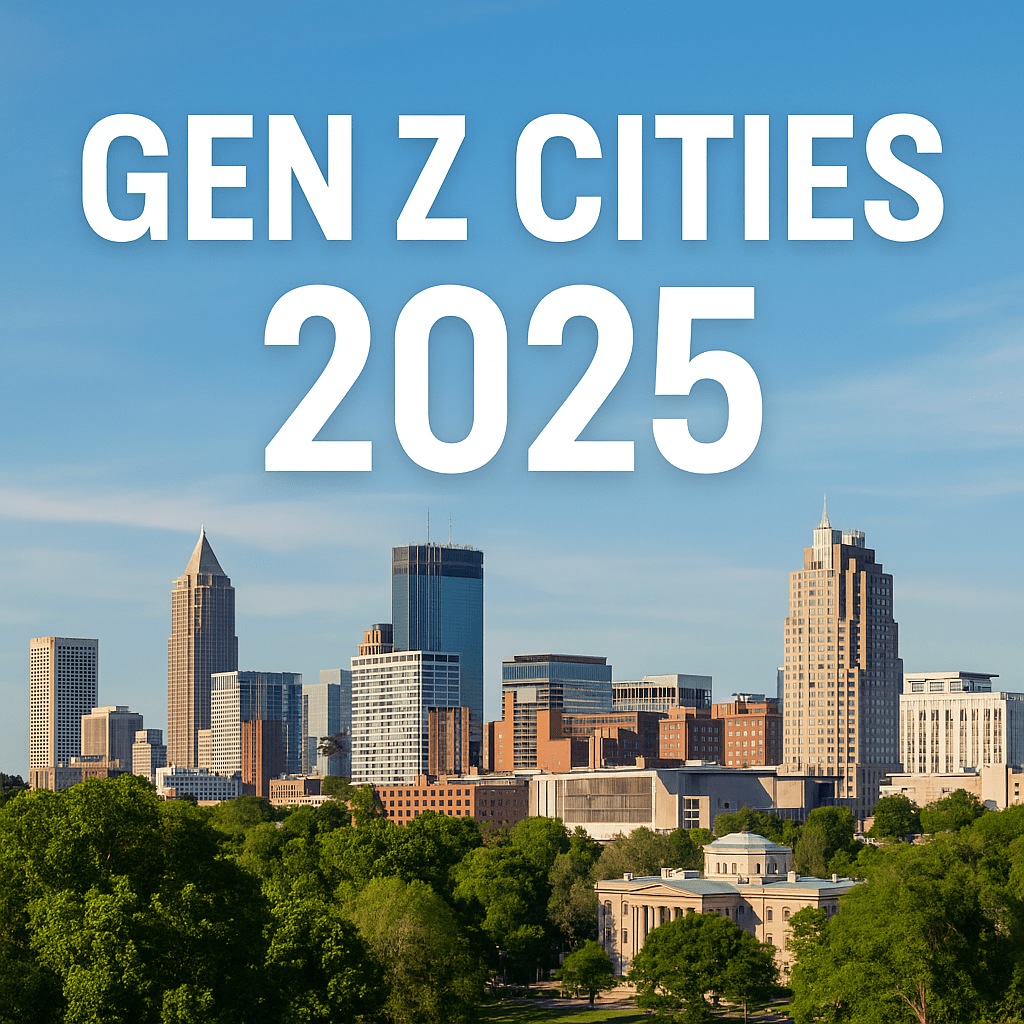
As developers and investors, we spend a lot of time studying demand—where it’s forming, what it values, and how it’s evolving. In 2025, no demographic is shaping the housing and employment landscape more than Generation Z. Born between 1997 and 2012, they’re now entering their peak renting, working, and forming-households years.
And they’re not moving blindly. According to Corebridge Financial, nearly 80% of Gen Zers say they’re actively planning for their financial futures. That mindset is already influencing where they live—and it’s shifting population growth toward cities that balance affordability, opportunity, and quality of life.
The latest 2025 rankings show a clear trend: Midwest and Southern metros are winning, while coastal innovation hubs remain strong magnets for education and career growth.
Top Cities for Gen Z in 2025
🥇 #1 – Minneapolis, MN
Minneapolis reclaims the top spot this year with cost of living 6.4% below the national average and one of the lowest unemployment rates in the ranking. The city’s investment in career-readiness programs and a deep cultural scene make it one of the few metros delivering both affordability and opportunity.
➡️ Investor takeaway: A growing young workforce and stable job base create steady rental demand and entry-level housing potential.
🥈 #2 – Atlanta, GA
Atlanta continues to attract Gen Z with a powerful mix: affordable internet, strong university presence, and green space (7.3 parks per 10K residents). It’s a Southern hub with both culture and career upside.
➡️ Investor takeaway: Strong job growth, growing tech sector, and continued in-migration point to sustained multifamily absorption.
🥉 #3 – Boston, MA
The lone Northeastern city in the top 10, Boston is driven by education (61% enrollment) and graduate-friendly job density. While rents are high, the city’s career pipeline offsets affordability challenges.
➡️ Investor takeaway: Tight supply and consistent demand make Boston a long-term hold market for well-located Class A and B assets.
#4 – Tampa, FL
Affordable, sunny, and growing. Tampa’s post-pandemic boom continues with a strong job market for new grads and a lower cost of living than Miami or Orlando.
➡️ Developer insight: Tampa’s next phase will be defined by workforce housing—targeted supply below Class A rents.
#5 – Raleigh, NC
Anchored by the Research Triangle, Raleigh offers Gen Z top-tier STEM jobs, affordable living, and access to major universities.
➡️ Investor takeaway: One of the most balanced markets for yield and growth in the Southeast.
#6 – Omaha, NE
An under-the-radar performer, Omaha combines low living costs with growing finance and tech sectors.
➡️ Investor insight: Secondary markets like Omaha offer stability, affordability, and low volatility—ideal for long-term rental portfolios.
#7 – Columbus, OH
Nearly one-third of Columbus jobs cater to early-career workers. Paired with strong universities and affordable living, it’s a sleeper hit for Gen Z.
➡️ Investor takeaway: Watch for multifamily absorption in walkable, mixed-use districts around OSU and downtown.
#8 – Austin, TX
Still hot—but more mature. Austin’s startup scene, cultural appeal, and job base remain strong, even as affordability tightens.
➡️ Developer note: The next wave of opportunity will center on attainable housing and co-living models.
#9 – Houston, TX
Houston’s size and diversity create constant churn. While unemployment is higher, scale and opportunity keep Gen Z flowing in.
➡️ Investor takeaway: Focus on infill and transit-accessible submarkets to capture steady renter demand.
#10 – Kansas City, MO
KC boasts the most affordable cost of living in the top 10 and a growing creative economy.
➡️ Developer insight: Its mix of affordability and culture makes it ripe for BTR and mixed-income projects.
Regional Trends to Watch
Midwest: Affordability Wins
Four of the top ten are Midwestern. With low costs, strong job markets, and youth-focused investments, metros like Minneapolis, Omaha, Columbus, and Kansas City are emerging as durable, cash-flow-oriented investment markets.
South: Growth and Opportunity
The South continues to dominate migration with five top cities. Atlanta, Austin, Raleigh, Tampa, and Houston offer a blend of job growth, weather, and education access—ideal for workforce and attainable housing development.
West: Innovation at a Cost
Affordability challenges remain, but cities like Denver, Seattle, and Portland still attract Gen Z professionals seeking career growth and lifestyle balance.
Northeast: Education Anchors
Boston, Philadelphia, and New York remain education and career hubs, though high costs will limit ownership prospects and push long-term renting.
Why It Matters
As Gen Z’s influence grows, cities that deliver affordability, education, and livability will capture the next wave of renters and first-time buyers.
For developers and investors, the message is clear:
Prioritize mixed-use, walkable environments. Lean into workforce housing and entry-level rentals. Invest in metros with strong education pipelines and economic diversification.
Markets that understand this generation’s priorities—purpose, access, and affordability—will outperform over the next decade.
Looking Ahead
Gen Z is intentional. They’re looking for cities that align with their values and budgets—places where careers can grow without crushing cost burdens.
Expect to see more migration toward affordable, opportunity-rich metros and a continued push for smart, sustainable, branded residences that blend tech, design, and community.
The map of opportunity is shifting—and developers who align their strategies with Gen Z’s preferences will capture the growth ahead.
 Daniel Kaufman Real Estate
Leave a comment