
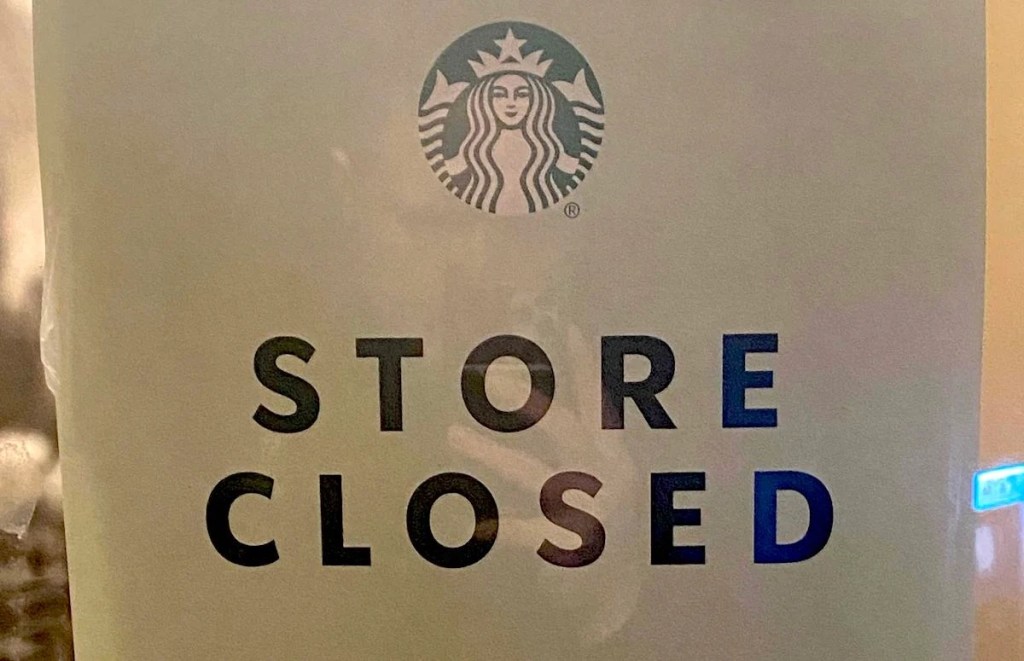
Starbucks has long been more than a coffee shop. It’s been a signal — a shorthand for convenience, affluence, and upward mobility. So when the company announces plans to shut down hundreds of stores across the U.S., it’s not just a business story. It’s a real estate story.
And like it or not, no neighborhood is immune. Both suburban strip centers and downtown retail corridors are seeing locations close their doors.
According to Starbucks CEO Brian Niccol, the closures are targeting stores that are “financially underperforming” or “unable to deliver the in-store experience customers expect.” That means they’re not pulling in enough revenue, or the physical setup no longer aligns with the brand’s evolving model.
But for local property owners, brokers, and investors, the question is less about coffee and more about what these exits signal for neighborhood value.
The Starbucks Effect — and Its Flip Side
For years, urban planners and investors talked about the “Starbucks Effect.”
The idea: when Starbucks enters a market, home prices rise.
It’s not that the coffee shop itself drives appreciation, but that Starbucks chooses to open in neighborhoods that already have rising incomes, job growth, walkability, and strong demand — all the ingredients for appreciating property values.
In other words, Starbucks is a lagging indicator of economic strength. Its presence confirms what the data already shows: a community on the upswing.
So what happens when that same brand starts pulling out?
A single closure may not crash home values, but multiple exits in close proximity can start to chip away at a neighborhood’s perception. When retail amenities vanish — especially recognizable ones — it signals softening demand, reduced walkability, and a possible shift in consumer demographics.
For buyers and renters, convenience and brand identity matter.
A closed Starbucks can feel like a red flag — the first crack in the façade of neighborhood vitality.
What the Research Says
A study by Emerald Insight analyzed Starbucks’ influence in Manhattan’s real estate markets.
The findings were nuanced:
Commercial rents near Starbucks locations showed a statistically significant positive correlation. In plain English: when Starbucks opened, nearby office rents tended to rise. Residential rents showed only a modest 2.3% uptick, and even that came with limited statistical significance.
Translation? Starbucks helps shape the perception and performance of commercial corridors, but it doesn’t necessarily move the needle on home values by itself.
Instead, its presence reflects a broader economic ecosystem — job growth, transit access, walkability, and disposable income. When those fundamentals weaken, Starbucks leaves. And when multiple recognizable brands start retreating, it often foreshadows a neighborhood in transition.
Closures as a Canary in the Coal Mine
In markets across the country, we’ve seen similar stories before.
When major retailers pull out — whether it’s Starbucks, Whole Foods, or Target — it often signals shifting trade areas and consumer behavior. Sometimes it’s a reflection of crime or labor costs; other times it’s simply about profitability.
But from a real estate perspective, the impact is less about the specific tenant and more about what their exit represents.
If a corridor loses multiple branded anchors, it can set off a negative feedback loop:
Reduced foot traffic Lower sales for neighboring tenants Weaker rent rolls Declining investor confidence And eventually, downward pressure on property values
The first closure is a data point.
The second is a pattern.
The third is a trend.
What Investors Should Watch
If you’re an investor, developer, or homeowner, don’t panic every time a coffee shop closes. But do pay attention.
Ask yourself:
☑️ Are other national brands leaving the same corridor?
☑️ Is local foot traffic declining?
☑️ Are there visible changes in tenant mix or vacancy?
☑️ What’s happening to job growth and household incomes in the submarket?
When combined, these signals tell a story. And often, the story starts before the data catches up.
Final Takeaway
Starbucks isn’t a market maker — it’s a market mirror.
Its locations follow prosperity and density, not the other way around.
So while a wave of closures won’t tank your property overnight, it’s worth watching how your neighborhood responds.
If new, vibrant tenants fill those spaces quickly, the fundamentals remain intact. If vacancies linger, it could point to deeper issues in demand, spending power, or urban planning.
In today’s environment, the smartest investors aren’t just tracking interest rates and cap rates — they’re tracking foot traffic, consumer behavior, and brand movement.
Because sometimes, the story of a neighborhood’s future starts with a “Closed” sign in a coffee shop window.
 Daniel Kaufman Real Estate
Leave a comment