
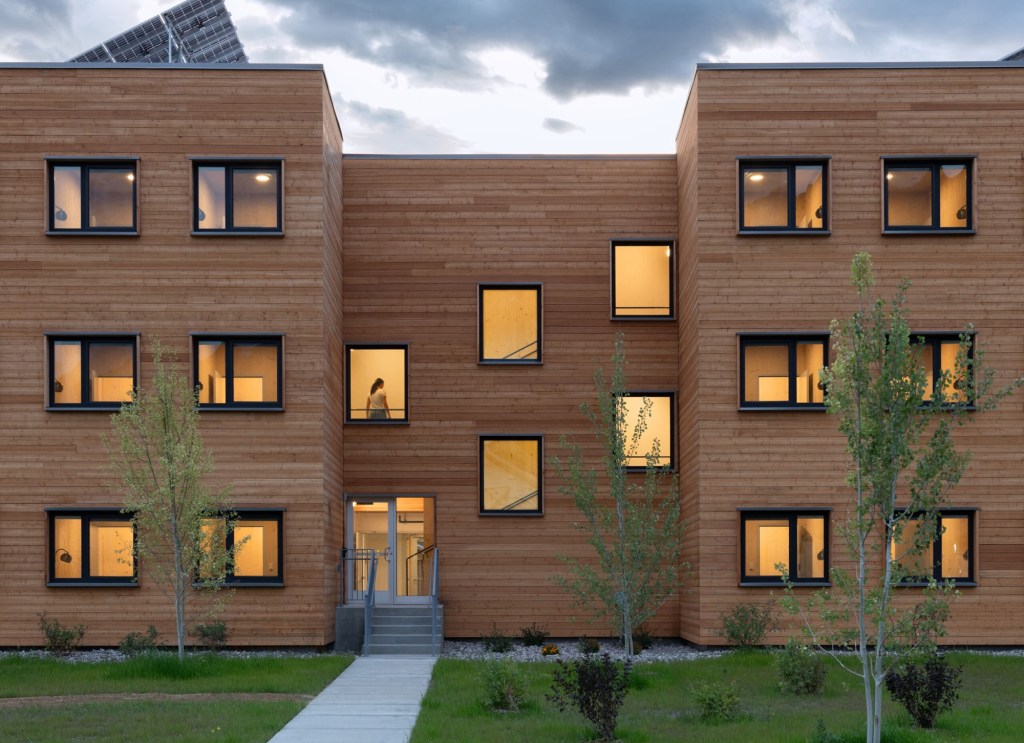
When architect Peter Rose first toured a modular school in Germany built with cross-laminated timber (CLT), he ran his hand along a stair joint where two modules met.
“With my eyes closed, I couldn’t feel the seam,” he recalled.
That single moment changed everything.
For Rose, modular construction was no longer just about cutting costs. It became a system capable of craftsmanship, precision, and permanence—a way to deliver beauty and performance at scale.
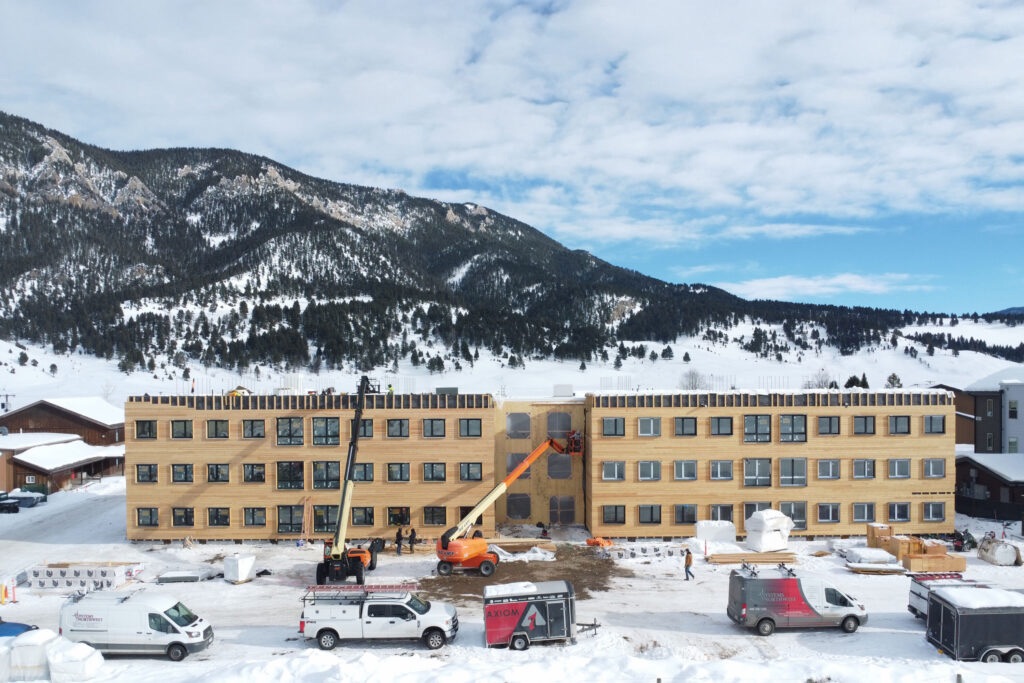
Today, as a founding partner of Integrated Design Cubed (IDCUBED), Rose and his team are proving that vision here in the United States. Their first major project—Bucks T-4 Housing in Big Sky, Montana—is now one of the largest mass timber modular buildings in North America: 120 modules, built off-site and assembled into a 30,000-square-foot workforce housing community. And it’s a clear signal that modular housing in America is entering a new era.
A European Approach, Brought to America
For decades, modular construction in the U.S. has carried a stigma: boxy, repetitive, uninspired. Too often, “modular” has meant cheap finishes and visible seams.
Rose knows that perception—and he’s intent on changing it.

With IDCUBED’s mass timber design-build model, architecture and construction are fully integrated. The team includes Peter Rose + Partners in the U.S. and NKBAK in Germany—firms with deep experience in CLT modular systems—alongside local builder Highline Partners and mass timber supplier Kalesnikoff.
Their European partners, NKBAK and Kaufman Bausysteme, have delivered more than 20 modular mass timber schools and housing projects across Europe. That experience now serves as a blueprint for U.S. expansion.
The key? Integration.
“Most projects are a chain of disconnected handoffs,” Rose explains. “Architects design, builders bid, subs improvise. Nobody’s truly aligned.”
IDCUBED fixes that by designing every system together—structure, mechanical, plumbing, finishes—using digital twins that map every conduit and component before construction even starts.
The result is less waste, fewer unknowns, and tighter budgets.
Precision, Efficiency, and Dignity in Workforce Housing
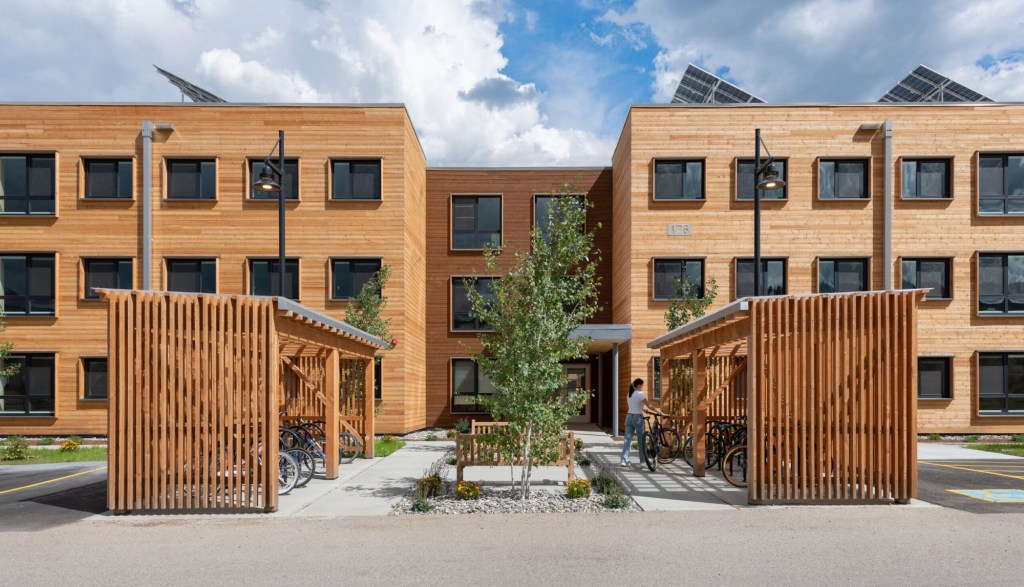
The Bucks T-4 Housing project is a case study in how this model can transform workforce housing—a segment often treated as an afterthought.
In a region where many workers face long, dangerous commutes through mountain passes, affordable and attractive on-site housing isn’t just a perk—it’s essential.
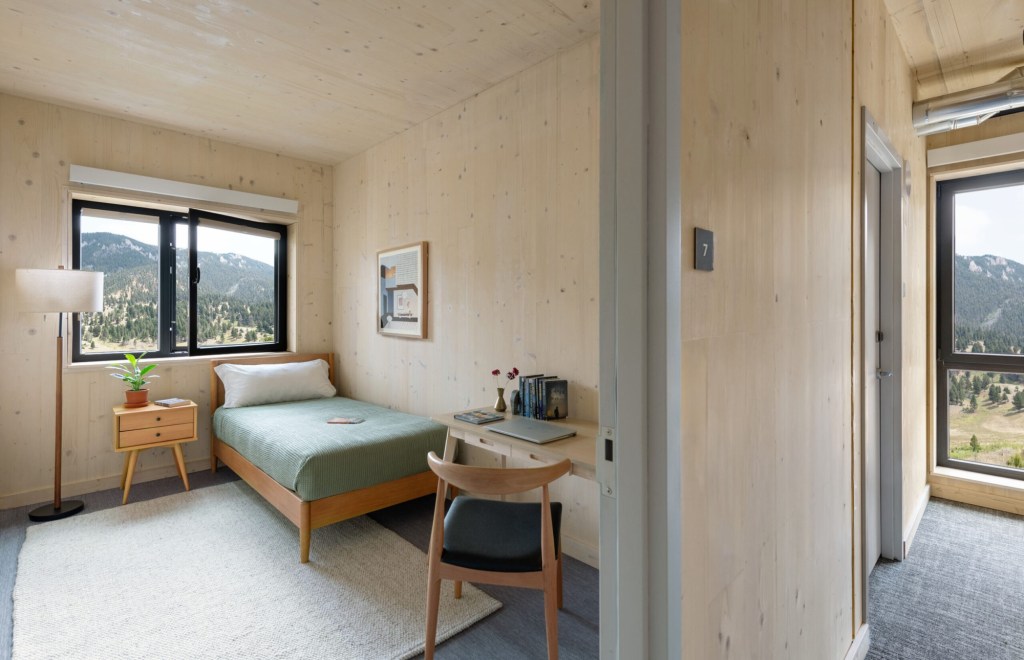
This three-story community delivers 96 private bedrooms, each within shared apartment-style units featuring communal kitchens, living spaces, and private baths.
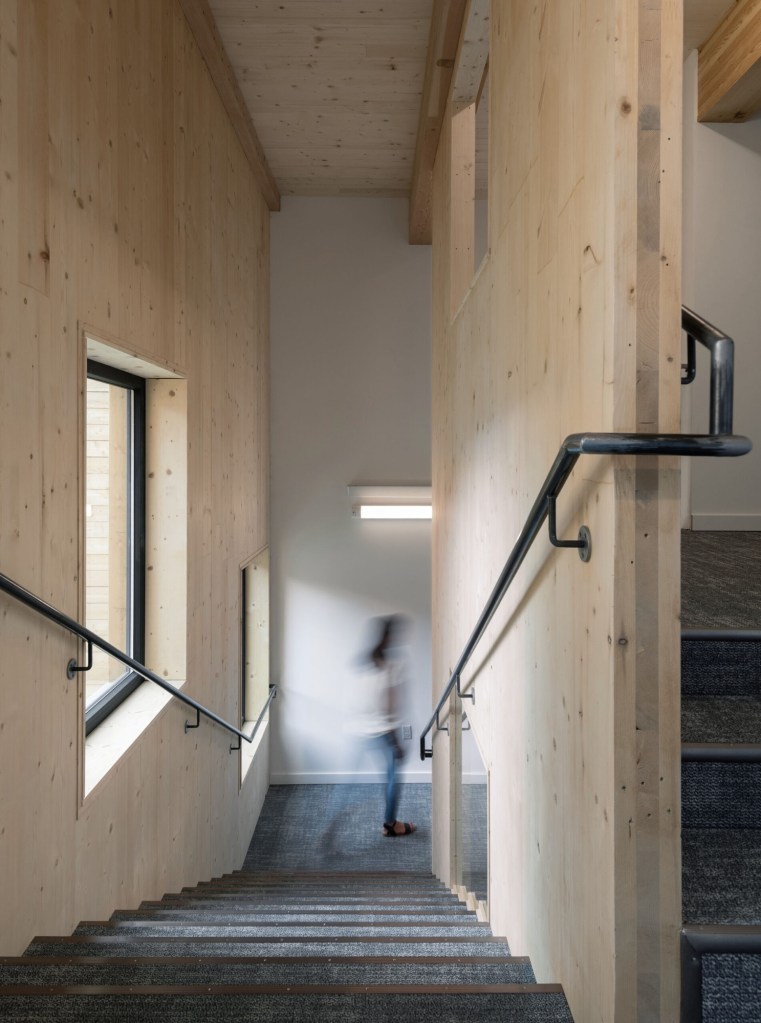
But what sets it apart is its design quality. Exposed Douglas fir CLT brings warmth and acoustic comfort. Thoughtful proportions and strategic lighting eliminate the boxy feel. The seams? Invisible.
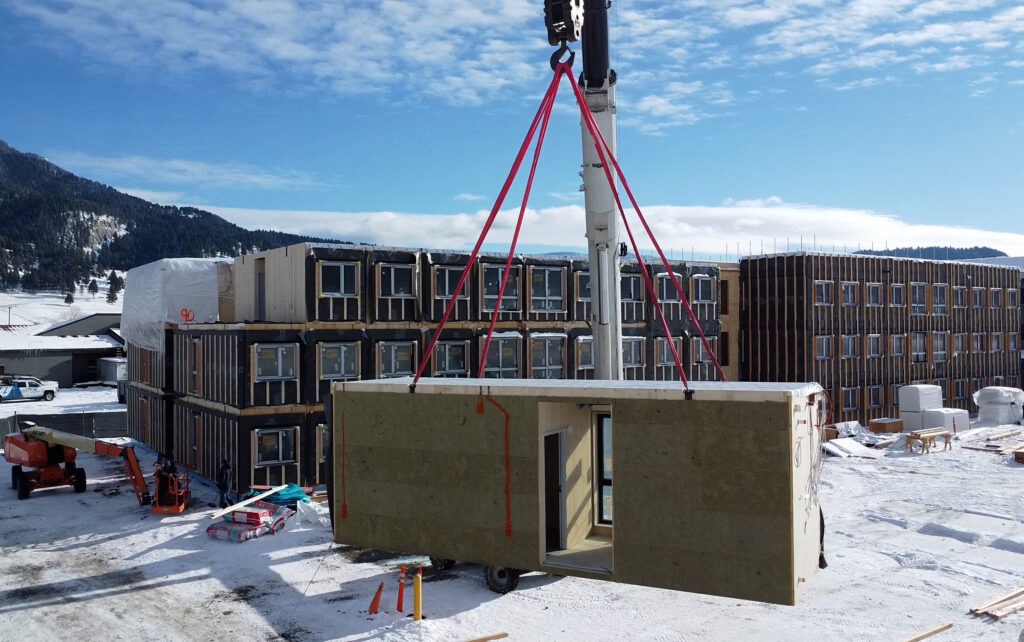
The modules arrived fully fitted with plumbing, electrical, cabinetry, finishes, and windows—ready to stack, connect, and finish.
Crews installed up to 20 modules per day, reducing on-site labor by more than 50% and completing the project under budget in just 11 months.
Even skeptics were converted. “After this job, they said, ‘We’d work like this again in a heartbeat,’” Rose recalls.
Agility That Scales
Unlike traditional modular factories that require costly assembly lines, IDCUBED’s system is nimble and scalable.
Modules are assembled at partner facilities like Kalesnikoff, then shipped to site for rapid installation.
“The sophistication is in the design, not the factory,” Rose says.
Looking ahead, IDCUBED plans to establish regional assembly halls—temporary or semi-permanent facilities near major projects—to reduce shipping costs, cut emissions, and create local jobs.
It’s a model that pairs global expertise with local execution, unlocking a path to high-quality, high-speed housing production across the country.
Why This Matters for Developers and Investors
For developers, this is more than just an inspiring design story—it’s a blueprint for the future.
By integrating architecture, engineering, supply chain, and construction under one roof, IDCUBED’s approach delivers:
Cost savings from streamlined coordination Faster schedules through off-site fabrication Higher quality with precision-built CLT modules Sustainability through local sourcing and reduced waste Scalability that can adapt to housing demand anywhere in the U.S.
And most importantly, it delivers housing that feels human—spaces that inspire dignity and belonging, even in workforce communities.
“This isn’t about building boxes anymore,” Rose says. “It’s about building something solid, seamless, and maybe even a little bit extraordinary.”
Project Snapshot
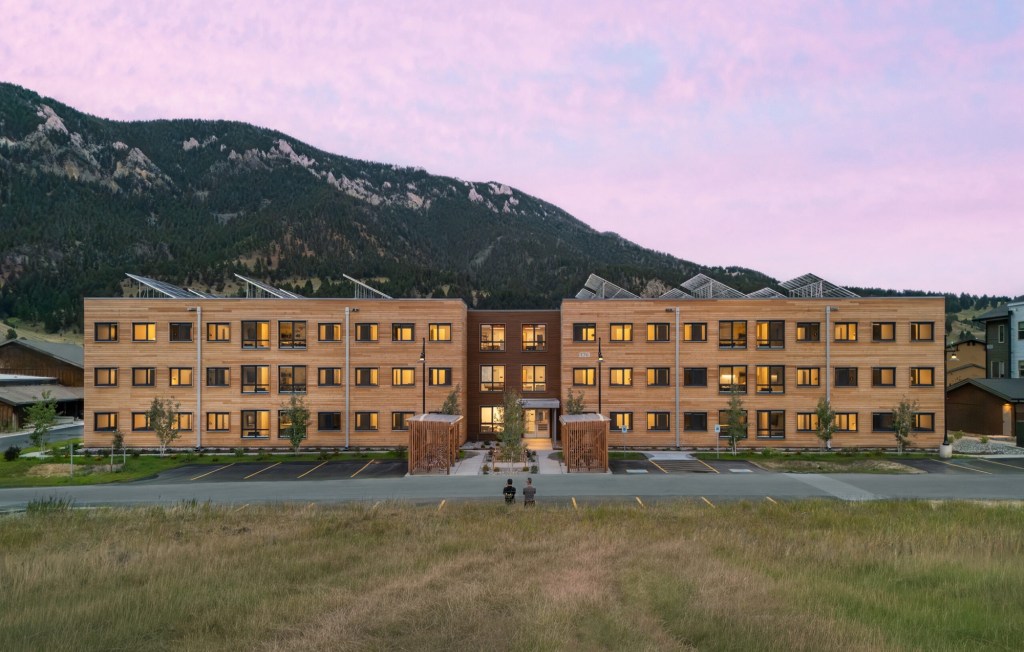
Name: Bucks T-4 Modular Housing Location: Big Sky, Montana Architects: Peter Rose + Partners & NKBAK Owner: Lone Mountain Land Company General Contractor: Highline Partners Design & Delivery: Integrated Design Cubed (IDCUBED) Mass Timber Supplier: Kalesnikoff Size: 30,000 sq. ft. Modules: 120 CLT units Completion: 11 months Program: 96 workforce housing units
The Takeaway
As the U.S. faces a nationwide housing shortage—especially for essential workers—projects like Bucks T-4 show what’s possible when design meets discipline.
Mass timber modular isn’t just faster. It’s better.
And it’s poised to reshape the way we build.
For real estate developers, investors, and municipalities searching for scalable, sustainable housing solutions, this is the model to watch.
 Daniel Kaufman Real Estate
Leave a comment