
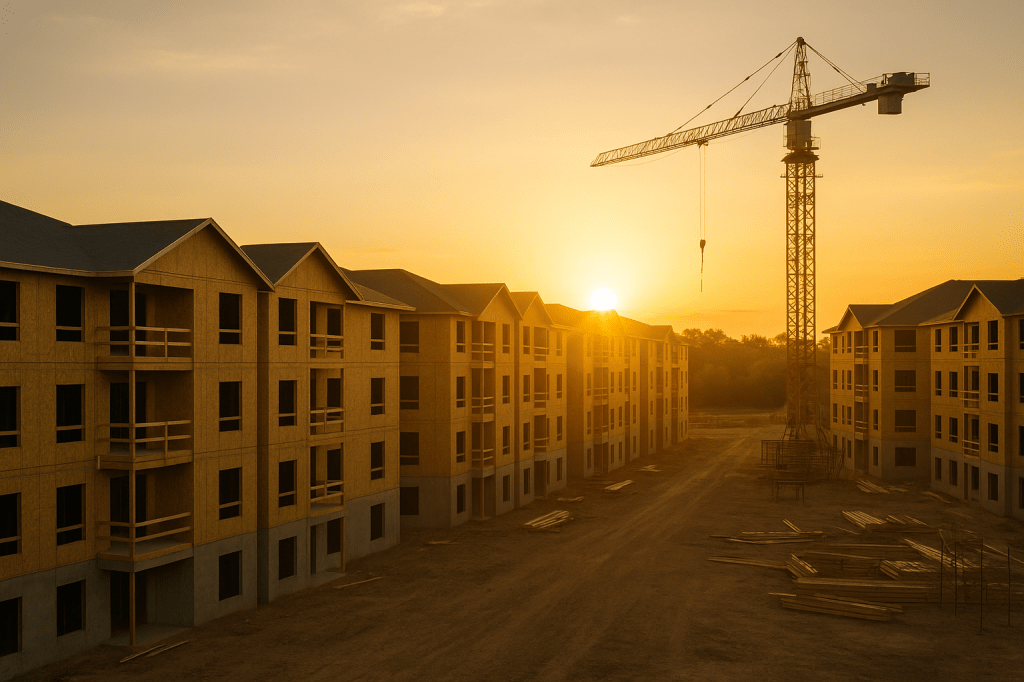
The latest Census numbers landed with a thud: May’s multifamily starts cratered 30 percent month-over-month to an annualized 316,000 units—the weakest print since November 2024. At first glance it feels like déjà vu from every “higher-for-longer” headline we’ve endured this cycle. But look a layer deeper and you’ll find the ingredients of the next great run for developers and capital partners willing to lean in while everyone else hits the brakes.
What the Data Really Says
Starts vs. permits. Yes, groundbreakings fell off a cliff, but permitting didn’t follow them over the edge. May permits ticked up 1.4 percent from April and are up 13 percent year-over-year. That divergence matters. Starts are notoriously lumpy (one delayed financing closing can skew a monthly print), whereas permits capture intent—the projects sponsors still believe pencil despite the noise.
Why the stall? The usual suspects:
Interest rates that refuse to blink even as inflation cools in fits and starts. Tariff uncertainty, with the White House hinting at new rounds that could whipsaw materials pricing overnight. Sticker-shock construction costs, amplified by lenders padding contingencies to sleep better at night.
REIT check-in. On recent earnings calls, the public multifamily players struck a careful balance—acknowledging tighter underwriting while quietly pushing design teams to keep new sites permit-ready. Translation: they’re pressing pause, not eject.
Vacancy and supply. The U.S. vacancy rate peaked late last year; every major forecast I track shows it drifting lower through 2025 as the once-bloated delivery pipeline shrinks 45 percent. Fewer keys hitting the market plus steady household formation equals firmer rent growth in 2026–and that’s before you layer in the cost of waiting to build.
Reading the Signals
May’s plunge in starts isn’t a canary keeling over; it’s a caution flag reminding us that capital markets set the tempo in the short term. But the permit backlog—combined with a vanishing future-completion pipeline—tells me demand and supply will collide again just as the Fed finally eases and tariff clarity returns.
Where the Opportunity Lies
Land & Entitlements on Sale. Sellers who need liquidity are far more negotiable when headlines scream “30 percent drop.” Bank the dirt now; the permit cycle will run its course while capital loosens. Preferred Equity & Rescue Capital. Partially capitalized deals will need gap financing. Structured correctly, you can capture equity-like upside with debt-like protections. Design/Build Efficiencies. Use this lull to value-engineer plans and lock in long-lead materials before demand roars back. A 2–3 percent cost savings today compounds nicely once rents firm. Rent Growth Optionality. Projects breaking ground in late 2025 or early 2026 will deliver into a market with fewer competing leases and rising wages—exactly what your pro forma wants to see.
The Bottom Line
I view May’s “bad” starts number as a gift. While the industry crowds the sidelines, we can underwrite with a clear eye, structure capital stacks creatively, and secure entitlements at a discount. When rates retreat and tariff policy stabilizes, the projects we seed today will be among the first out of the gate—exactly when tenants, lenders, and the broader market come looking for fresh, well-located product.
In short, the pause is temporary, but the window it opens for disciplined developers and investors is anything but. Let’s use it.
 Daniel Kaufman Real Estate
Leave a comment