

There’s a bold new vision coming to life in the heart of Portland, Maine—and it’s not subtle.
East Brown Cow, one of the city’s most active and ambitious developers, has unveiled plans for a landmark 30-story tower at 45 Union Street in the historic Old Port district. If completed, this 380-foot structure—designed by the globally renowned Safdie Architects—would become the tallest building in Maine, surpassing even The Casco, which only recently claimed that title.
For those of us in development, this project is more than just a vertical statement. It’s a case study in market timing, placemaking, and architectural storytelling.
A High-Rise in a Low-Rise City
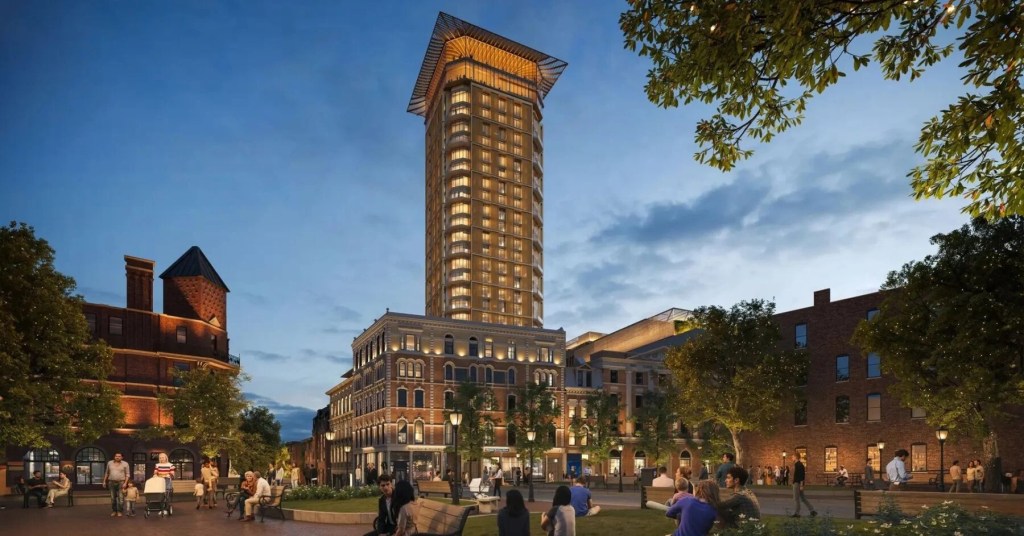
Portland isn’t Manhattan, and that’s the point. It’s a growing, culturally rich city that has seen an influx of talent and capital since the pandemic. Young professionals fleeing Boston’s price tags have turned Portland into a magnet for remote workers and tourists alike. The Old Port—cobblestone streets, fishing piers, and brick buildings—has become both a destination and a battleground for the pressures of modern urbanization.
So when Safdie Architects steps in with a 30-story tower inspired by the region’s lighthouses, eyebrows raise—but so do expectations.
The building is planned as a mixed-use centerpiece with a hotel, residences, spa, sky-lobby bar and restaurant, and indoor-outdoor café. In total: nine stories of hospitality, 14 stories of residential, and a transparent ground-level base that connects to the street and community below. The materials, massing, and even the lighthouse symbolism are all tuned to Old Port’s maritime DNA.
Why It Matters
Let’s not miss the forest for the timber pavilion.
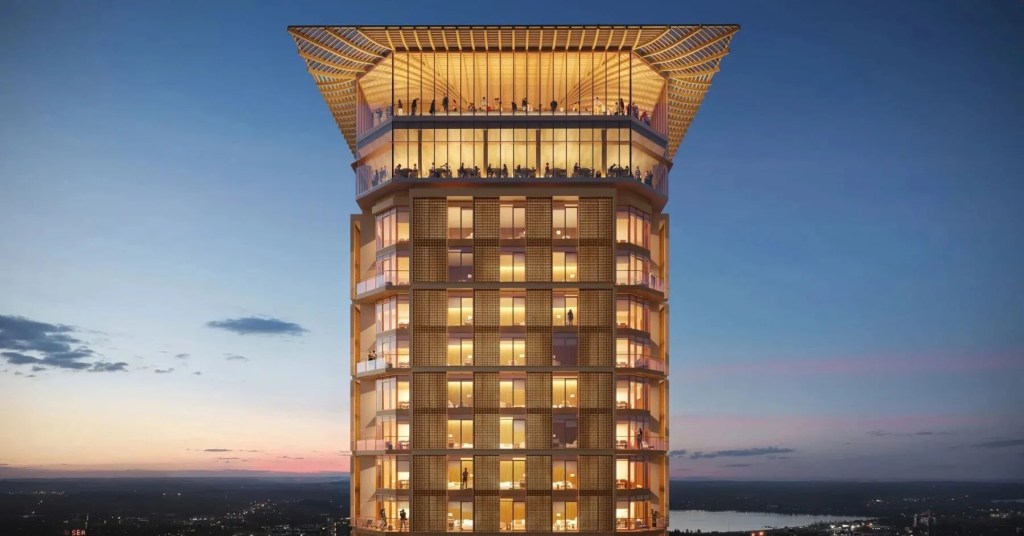
This tower marks a psychological shift for Portland. It signals to institutional capital that this isn’t just a quaint town on the coast—it’s a serious, evolving market with potential for vertically integrated mixed-use investment. The fact that Safdie Architects, Michael Boucher Landscape Architecture, and Pentagram are all on the design team tells you the level of intentionality here.
Even more interesting is how the team is approaching this as an urban repair project. Rather than a standalone icon, it’s part of a 4-acre master plan meant to “stitch together” a fragmented district left behind by urban renewal. That kind of restorative development—mixing restoration with new construction—is complex and capital-intensive, but it’s exactly what Portland’s next chapter demands.
Development Window: 2026–2030

The timeline to break ground is loosely projected between 2026 and 2030, pending the usual gauntlet of approvals, public process, and permitting. But the lead time speaks to the scale—and the stakes.
As developers and investors, we should be paying close attention to how Portland’s planning commissions, local stakeholders, and economic development agencies respond. This project will become a litmus test for how much ambition a city like Portland can—and will—support.
Final Thoughts

Every cycle has its breakout cities. Portland, Maine, may just be one of them. It’s walkable, waterfront, politically stable, and increasingly desirable for both lifestyle renters and institutional buyers. This project—equal parts risk and reward—could be the tipping point that puts it on more national radars.
Safdie said it best: “This is a beacon.”
The only question now is: will it spark a wave of next-gen urban development in New England’s most underestimated market?
About the Author
Daniel Kaufman is a developer, investor, and founder of Kaufman Development, with projects spanning multifamily, mixed-use, and build-to-rent communities nationwide. His commentary has been featured on Substack, LinkedIn, and danielkaufmanre.com.
 Daniel Kaufman Real Estate
Leave a comment