
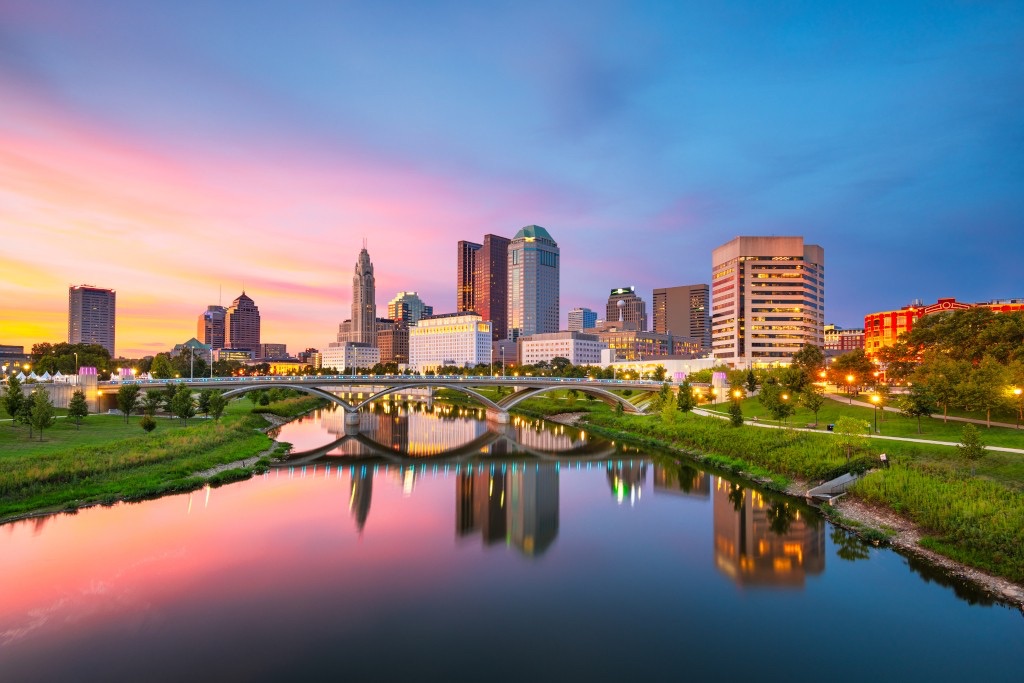
For decades, the U.S. heartland was branded as “flyover country”—a quiet backdrop to the coastal power centers of New York, Los Angeles, and San Francisco. But that narrative is rapidly shifting. Post-pandemic migration patterns have sparked a resurgence in the heartland, triggering population growth, economic expansion, and a steep rise in home prices in key secondary markets.
The cities leading the charge? Columbus, OH, Grand Rapids, MI, Indianapolis, IN, and Nashville, TN—each attracting a wave of new residents seeking affordability, economic opportunity, and a more balanced pace of life.
The Data Backs It Up
According to U.S. Census Bureau data, roughly 39% of Americans lived in the heartland in 2024—a 2.65% increase from 2020. For the first time since 1959, the region outpaced the national population growth rate, a signal that internal migration is reshaping the housing map.
Economists point to several tailwinds: persistent affordability relative to coastal markets, access to high-paying jobs in sectors like tech, manufacturing, health care, and finance, and quality-of-life advantages that continue to appeal to remote workers and young families alike.
“Affordable housing remains a key driver in today’s high-rate environment,” notes Realtor.com® economist Jiayi Xu. “And many of these markets are outperforming in terms of job creation and low unemployment.”
Markets on the Move
Columbus, OH: The city’s median home price jumped 26% from 2019 to 2025, climbing from $285,671 to $360,000. With major investments like Intel’s $28 billion semiconductor complex in nearby New Albany and Anduril Industries’ $1 billion defense tech factory, Columbus is fast becoming a Midwestern powerhouse. The Intel initiative alone is expected to generate 3,000 permanent jobs and inject $2.8 billion into the local economy.
Grand Rapids, MI: Median home prices surged 36%, with the typical home now priced at $385,000. The region’s strong industrial base, growing healthcare sector, and low cost of living continue to attract both families and professionals priced out of larger markets.
Indianapolis, IN: Offering the most affordable entry point among its peer cities, Indy’s median home price now stands at $315,000—a 17% increase since 2019. Its logistics infrastructure, central location, and diversified employment base make it an increasingly attractive option for relocating companies and residents alike.
Nashville, TN: The standout performer. Home prices in Music City rose an eye-popping 47% in five years, with the median now at $535,000—25% above the national average. Nashville continues to benefit from an influx of capital, talent, and companies, cementing its place as one of the nation’s most dynamic growth markets.
Where Are the Buyers Coming From?
Coastal migration continues to drive the heartland surge. According to Realtor.com’s cross-market demand data, top cities like Columbus and Nashville are seeing outsized buyer interest from Washington, DC, New York, New Jersey, and Chicago. In Q1 2025:
Columbus saw the most demand from DC (24.4%), New York (10%), and Cleveland (7%). Grand Rapids attracted 16.7% of its out-of-market viewers from DC. Indianapolis saw 18.2% of its external traffic from the DC area. Nashville was particularly popular with Chicago buyers, who made up 22.2% of outside viewers.
This data reinforces a broader trend: price-sensitive, quality-of-life-seeking buyers are looking inland—and they’re targeting metros that offer the right mix of economic opportunity and housing attainability.
What’s Next? Keep an Eye on These Boomtowns
Realtor.com analysts are also tracking rising demand in other heartland markets, including:
Louisville, KY: Garnering 0.5% of total Realtor.com traffic, Louisville homes had 1.5x the national average views per listing. The city saw particularly high engagement from shoppers in the South and Midwest, accounting for 61.4% and 21.5% of interest, respectively.
Detroit, MI: With a population exceeding 4 million, Detroit ranked as the fourth most popular market among online home shoppers. Listings in the Motor City saw 1.3% of Realtor.com traffic, and viewership per listing was 1.2x the national average. Notably, over 70% of prospective buyers were from the Midwest.
Final Thoughts
This resurgence of the heartland is more than a demographic blip—it’s a realignment of the American housing market. As talent and capital continue to migrate inward, these mid-sized metros are rapidly transforming into regional anchors for business, culture, and real estate investment.
For developers, investors, and homebuilders, the message is clear: don’t overlook the middle. The future of housing growth is increasingly being written between the coasts.
Daniel Kaufman is the founder of Kaufman Development and an active investor and developer focused on growth markets across the U.S. Learn more at www.danielkaufmanrealestate.com.
 Daniel Kaufman Real Estate
Leave a comment