
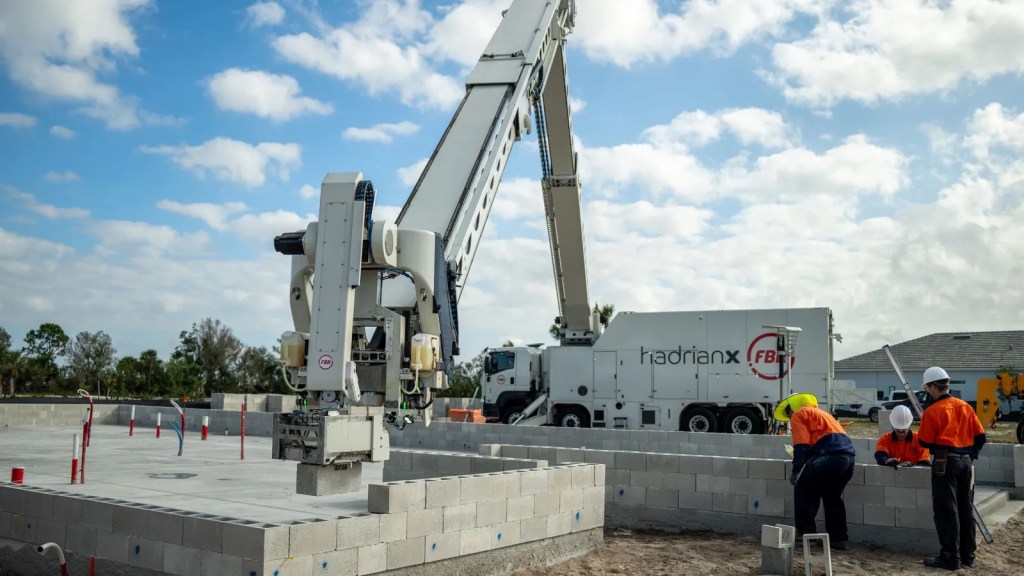
PulteGroup Pilots Hadrian X, a Robot That Constructs Structural Walls in a Single Day
The real estate development landscape is shifting, and technology is leading the way. One of the nation’s largest homebuilders, PulteGroup, recently unveiled its latest foray into AI-driven robotic construction with the successful pilot of the Hadrian X system—an advanced automation tool capable of assembling structural walls in just one day.
This test, conducted at the TerraWalk community in Babcock Ranch, Florida, marks a significant milestone in the adoption of robotics for large-scale residential projects. With increasing labor shortages and rising material costs, developers and investors should take note—automation like this could significantly reduce construction timelines, improve efficiency, and cut labor expenses, creating new opportunities in the housing market.
The Power of Hadrian X: Speed, Efficiency, and Cost Reduction
Developed by Australian tech firm FBR, Hadrian X utilizes an AI-guided robotic arm to precisely place concrete blocks, secured with an advanced adhesive that bonds twice as strong as traditional mortar. The process minimizes waste and enhances build quality while dramatically accelerating construction schedules.
A video released by PulteGroup shows the robotic arm—mounted on a truck—working methodically to lay the foundation of a home. The automation of structural wall construction, traditionally a labor-intensive process, is now being streamlined, creating new efficiencies that developers and investors should explore.
A Game Changer for Real Estate Investors and Developers
The adoption of AI-powered robotics in construction presents tangible benefits for developers:
• Faster Project Turnarounds – With structural walls built in a day, entire developments can progress faster, reducing carrying costs.
• Lower Labor Dependence – As skilled labor becomes scarcer and more expensive, robotics provide an alternative workforce that doesn’t fluctuate with labor shortages.
• Consistent Quality Control – Automation ensures precision and uniformity, reducing costly rework.
• Sustainability Advantages – The adhesive-based construction technique minimizes waste compared to traditional mortar, aligning with growing ESG standards in real estate investment.
“This type of technology is exactly what forward-thinking developers should be paying attention to,” says Daniel Kaufman, CEO of Daniel Kaufman Real Estate. “The ability to reduce labor costs, speed up construction, and improve precision could transform how we approach large-scale projects.”
The Broader Implications for the Real Estate Industry
With only 10 homes in the U.S. built using Hadrian X so far, the technology is still in its early stages—but the trend is undeniable. Developers looking to scale their operations and investors seeking higher margins should closely monitor advancements in automated construction.
The bottom line: AI-driven robotics aren’t just a glimpse into the future—they are actively reshaping how homes are built today. For those in real estate development, understanding and integrating these technologies could provide a competitive edge in an increasingly tech-driven industry.
Would you consider adopting AI-powered construction for your next development? Share your thoughts in the comments.
 Daniel Kaufman Real Estate
Leave a comment