
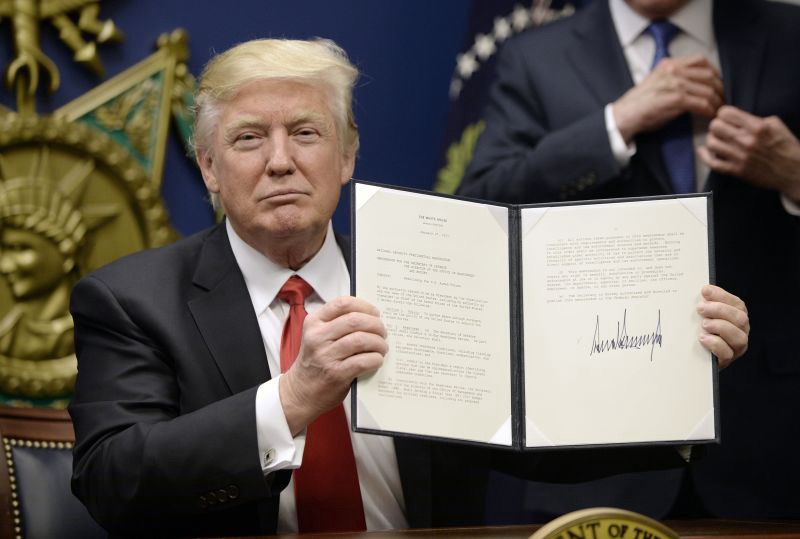
As the U.S. enters another four years under President Donald Trump’s administration, immigration policy is once again at the center of political and economic debates. For industries like real estate development and construction, which rely heavily on immigrant labor, the administration’s stance could have serious implications. From ICE crackdowns to visa policy uncertainty, the next four years could bring significant labor market disruptions, impacting everything from project timelines to housing affordability.
Tougher Immigration Enforcement Begins
Trump’s administration has wasted no time in ramping up immigration enforcement.
• ICE Crackdowns: The U.S. Immigration and Customs Enforcement (ICE) has significantly increased arrests of individuals without proper work authorization. Reports indicate that ICE is arresting around 1,000 people per day, compared to 310 per day in Biden’s final year in office.
• Social Media Accountability: ICE has started publicly posting daily arrest numbers on X (formerly Twitter), signaling a more aggressive approach to enforcement.
For industries that rely on immigrant labor, these crackdowns could create significant workforce shortages, delays in projects, and increased compliance costs.
Why This Matters for Construction & Real Estate Development
The construction industry has long depended on foreign-born labor, with a Pew Research Center study estimating that:
• 26% of all construction workers are immigrants, and
• 13% are unauthorized to work in the U.S.
This means that any policy restricting immigration or increasing deportations could create major labor shortages, making it harder to staff job sites and complete projects on time.
Visa Policy Uncertainty Creates More Confusion
Trump’s stance on immigration remains unpredictable, and even his closest advisors are divided on the issue:
• Elon Musk, leading Trump’s Department of Government Efficiency, has supported expanding H-1B visas, which could be good news for businesses needing skilled workers.
• Stephen Miller, Trump’s Deputy Chief of Staff, is known for his strict anti-immigration policies, which could limit access to work visas.
What About Work Visas?
For construction workers, certain visas—such as H-2B (for temporary foreign workers)—are critical. However, many of Trump’s policies focus on reducing immigration rather than expanding legal pathways for foreign labor.
While EB-3 and H-1B visas typically apply to more skilled workers, blue-collar workers in construction often rely on H-2B visas. Any restrictions on these could further squeeze an already tight labor market.
Economic Concerns—Is Mass Deportation Feasible?
While Trump has vowed to deport millions of undocumented immigrants, economists argue that doing so would be not only disruptive but also financially unfeasible.
• Cost to Deport 1 Million Workers: Estimated at $88 billion per year (ABC Chief Economist Anirban Basu).
• Long-Term Workforce Impact: Reducing the workforce while construction demand remains high would drive up labor costs and slow down project completions.
From a business perspective, these policies seem counterproductive—especially when labor shortages are already causing delays and cost overruns in development projects across the country.
Birthright Citizenship Debate: Another Legal Battle Looms
Beyond deportation efforts, Trump has also issued an executive order aimed at ending birthright citizenship—a move that has already been blocked by a federal judge but is expected to go through lengthy legal challenges.
• Potential Impact on Workforce: Even if the policy doesn’t take effect, it could create confusion over citizenship verification, leading to delays in hiring and documentation for employers.
• Risk of Mistaken Enforcement: Workers with legal work authorization may still get caught in audits, losing jobs due to bureaucratic errors.
For businesses that already struggle with labor shortages, these additional legal uncertainties create an environment of fear and hesitation, making it harder to recruit and retain workers.
Could Trump’s Second Term Bring Immigration Reform?
While Trump’s first term was marked by strict anti-immigration policies, some experts believe his second term might focus more on reform rather than outright restriction.
John Dorer, CEO of EB3.work, remains cautiously optimistic, noting that:
• Trump himself hires foreign workers for his Mar-a-Lago resort under visa programs.
• Pro-business interests within Trump’s circle might push for a more streamlined legal immigration process to meet labor demands.
However, the uncertainty surrounding Trump’s policies is already causing hesitation among businesses and workers alike:
• Companies may avoid sponsoring foreign workers out of fear that the process will become too costly and complicated.
• Foreign-born workers may opt for jobs in more immigration-friendly industries rather than risk uncertainty in construction.
What This Means for Real Estate Developers & Investors
For real estate professionals, these immigration policies could lead to:
✅ Rising labor costs due to workforce shortages.
✅ Project delays as contractors struggle to find skilled labor.
✅ Tighter margins as construction costs increase.
✅ Opportunities for automation & modular construction, as developers look for ways to reduce dependency on labor-intensive methods.
The next four years will test the resilience of the construction industry. Developers and investors must stay informed, adapt to changing labor dynamics, and proactively plan for workforce challenges.
About Daniel Kaufman Real Estate Development
At Daniel Kaufman Real Estate Development, we understand the complexities of the real estate market—including how policy changes can impact the industry. Our expertise in build-to-rent townhome communities ensures that we stay ahead of market trends, providing strategic investment opportunities for our partners.
Contact Us
📍 Daniel Kaufman Real Estate
🏢 611 Wilshire Boulevard
📍 Los Angeles, California 90017
📞 Phone: 341-217-2580
✉ Email: daniel@kaufmanredev.com
🌐 Visit us online: danielkaufmanre.com
Stay informed about the latest real estate developments—subscribe for updates and connect with us.
Final Thoughts
With immigration crackdowns underway and visa policies in flux, the next four years could reshape the construction and real estate landscape. Whether Trump’s administration takes a hardline stance or pivots toward reform, one thing is clear—businesses must be prepared for workforce challenges ahead.
What are your thoughts on Trump’s immigration policies? How will they impact real estate development? Let’s discuss in the comments below!
 Daniel Kaufman Real Estate
Leave a comment