
New Yorkers face a deepening housing crunch with a mere 1.4% vacancy rate and soaring costs. But what’s causing this crisis? Let’s dive into the dramatic decline in multifamily permits and explore ambitious solutions.

The Numbers Don’t Lie
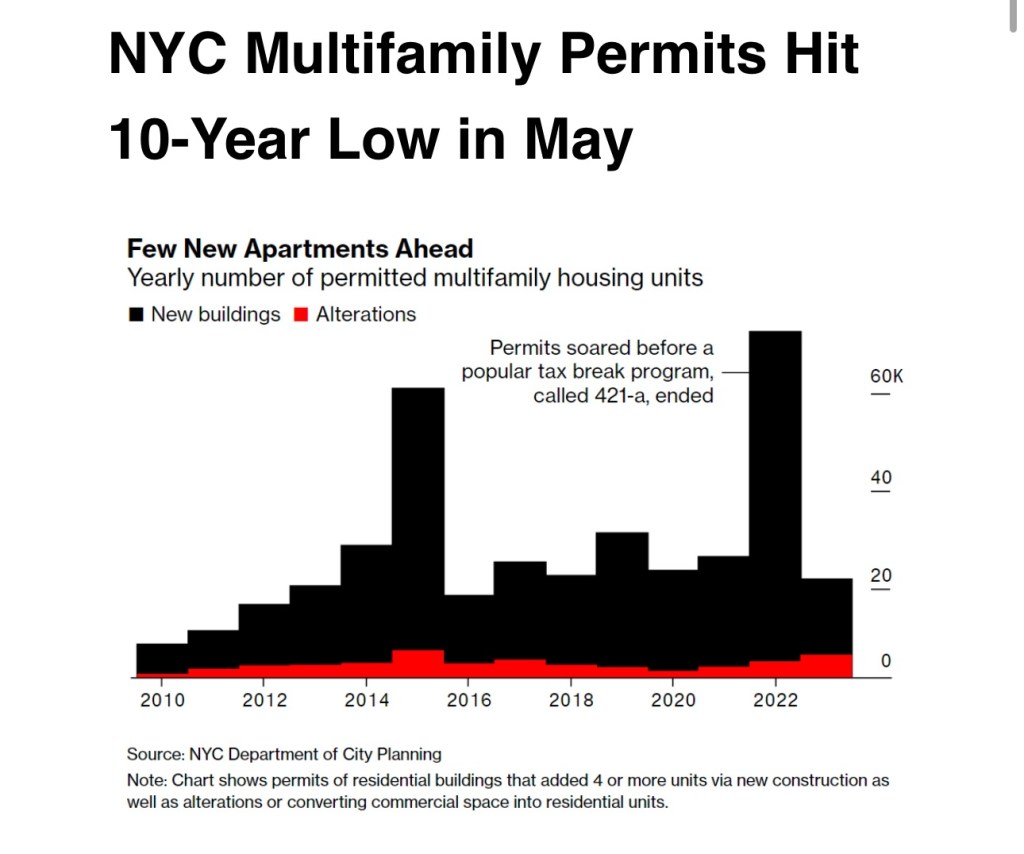
In May, the number of permits issued for multifamily buildings plummeted to a shocking 36—the lowest monthly count in a decade, excluding the pandemic year of 2020. Last year, New York City saw permits for only about 15,500 apartment units—the smallest annual total since 2016. The NYC Department of Buildings and Department of City Planning confirm this alarming trend.

Affordability Crisis Looms
High interest rates and cautious lending practices have frozen many housing projects. The fear? New York may soon become unaffordable for all but the wealthy. As if that weren’t enough, the city’s $315 billion taxable commercial real estate market is already under pressure due to a post-pandemic shift to remote work and an underfunded public transit system.
Mayor Eric Adams’ Bold Goal
In response to this crisis, Mayor Eric Adams has set an ambitious target: adding 500,000 housing units over the next decade (that’s 50,000 units per year). To put this in perspective, from 2012 to 2022, the highest number of units approved in any decade was 297,000 under former mayors Bloomberg and de Blasio. In 2023, only about 16,300 units were proposed—a far cry from the needed surge.
Zooming In: Long Island City’s Transformation
Since 2010, Long Island City has witnessed significant development, adding a whopping 18,500 units. What was once an industrial area is now a bustling residential neighborhood. However, this surge in housing has had consequences: the median asking rent shot up by 56% from April 2010 to April 2024.
A Costly Solution: Converting Commercial Spaces
City and state officials are pushing for a solution: converting commercial spaces into residential units. The Financial District alone has seen nearly 6,000 units added since 2010. Governor Hochul’s housing law offers tax breaks for conversions starting by mid-2031, including affordable units. Currently, 69 buildings are participating in the city’s program.
The Takeaway
The expiration of the 421-a tax exemption in 2022 has stalled development, and its replacement, 485-x, hasn’t yet proven effective due to new wage requirements. Experts argue that NYC must think bigger and tackle its housing crisis with a multi-faceted approach. Government subsidies, regulatory changes, and diverse housing types are essential to prevent further displacement.

 Daniel Kaufman Real Estate
Leave a comment